During the winter months, one of the most compelling phenomena unfolds in the skies above us.
For those of you who know me, you know I am of course talking about bird migration.
Each year, millions of birds embark on journeys spanning thousands of miles—not by choice, but by necessity. These epic travels often come at the cost of hundreds of thousands of lives, yet they persist, driven by the fundamental needs for food, suitable breeding grounds, and favorable climate conditions.
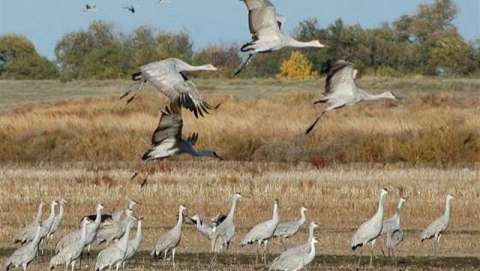
For a very small perspective on this, take the small town of Lodi, California. Nestled in California’s Central Valley, about 2.5 hours east of San Francisco and an hour south of Sacramento, this otherwise quiet town transforms into a hub of migratory activity. Thousands of Sandhill Cranes (Antigone canadensis) descend upon the Delta wetlands, where tributaries of the San Francisco Bay stretch eastward into the valley. Their noisy calls announce the arrival that is more than just a spectacle—it’s a demonstration in its purest form how an animal adapts to its new environment, responding to instincts as old as time itself: change or perish.
When Our Own Migration Begins
Now that winter is upon us, I’ve been thinking about this imperative to migrate. Like millions of birds navigating through an unknown landscape, many of us find ourselves forced to adapt when our usual status quo no longer sustain us.
In a way, I’m currently dealing with migration of sorts myself, having lost my Product Management role over a year ago in a tech landscape that’s become as unpredictable as changing weather patterns.
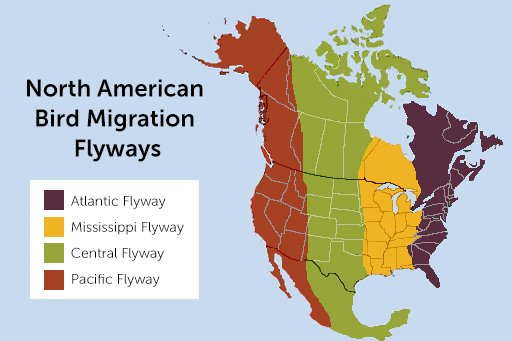
As a lifelong birder, I’ve witnessed countless winter migrations and have started to notice their patterns. Each year, millions of birds traverse the major flyways in North America—the Pacific, Central, Mississippi, and Atlantic flyways—with some venturing as far as South America. They leave their summer breeding grounds as resources dwindle, responding to environmental cues that signal it’s time to move. These birds must trust their instincts while trying to traverse an ever changing landscape. We as humans often face similar imperatives—the need to stay true to who we are while adapting to radical change.
When Our Environment Reshapes the Usual Route Taken
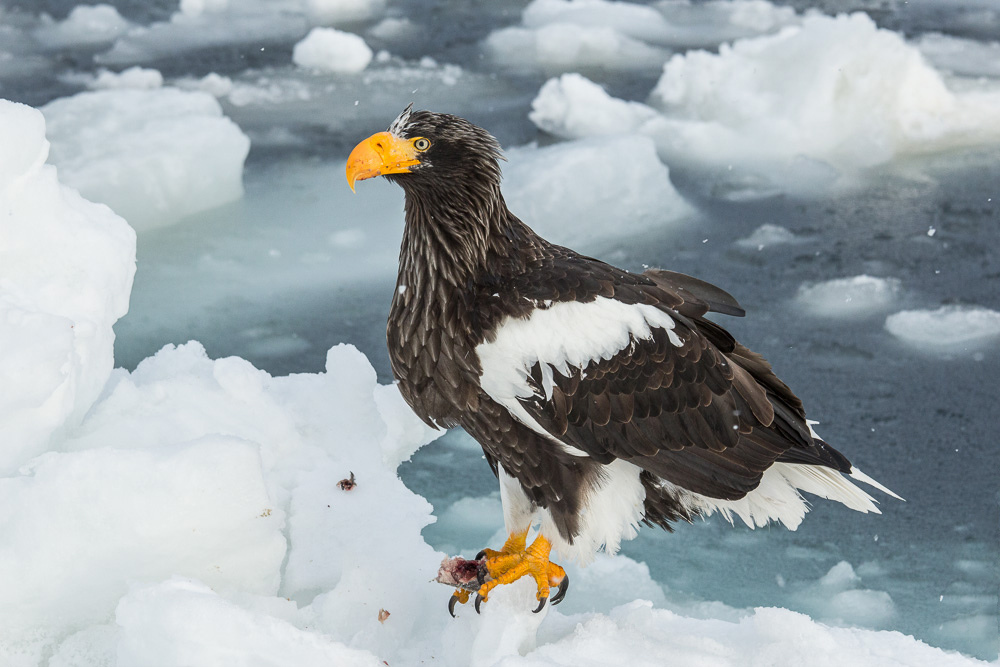
As a newly minted Climatebase fellow, the impact of global climate change on migration patterns resonates deeply with me. Consider the remarkable story of the Steller’s Sea Eagle that appeared in the US—a massive raptor that should have been flying over parts of China and Russia but being spotted in parts of Texas and as far north as Nova Scotia! This magnificent bird, found thousands of miles off course likely due to extreme weather patterns, makes me think of my own displacement last year from a Product Management position that had a career trajectory once seeming as predictable as the changing seasons.
There is no doubt we are currently witnessing an unprecedented shift in the workforce. 2024 is still feeling the effects of 2020’s disruptions of the Pandemic, particularly affecting tech professionals like myself who rode the hiring wave only to find ourselves in today’s barren job market. The traditional migration routes—the usual paths to new positions—have been altered as dramatically as birds’ flight paths affected by climate change.
Yet birds demonstrate incredible resilience, particular through their remarkable internal compasses. Take the Piping Plover (Charadrius melodus) for example, which I’ve been fortunate enough to observe during countless family trips to Cape Cod, can return to within 50 feet of its previous year’s nesting site after flying thousands of miles. Through my binoculars, I’ve watched these small yet stunning birds navigate their world with precision, even as their vulnerability along the beaches becomes increasingly apparent.
Reading the New Signs
Today’s challenges aren’t just about navigation—they’re about adaptation when familiar landmarks vanish. For birds, it might be a new housing development where their nests once were or worse yet, certain beach-heads being partially submerged by the rising sea!
For many of us, the landscape has transformed. Where once stood familiar career pathways, now looms what feels like a giant AI-powered tsunami poised to reshape the entire shoreline.
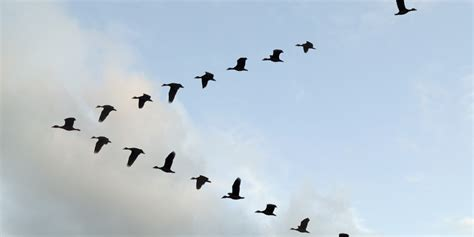
That said, the power of our communities cannot be overstated. We see this in the flocks of birds often flying in that easily identifiable “V” formation. These are clear indicators of relying on community but also the science of aerodynamics that make these long journeys possible. The lead bird breaks the headwind, while those behind benefit from reduced air resistance. Periodically, they rotate positions, sharing the burden of leadership. In our own personal and professional lives, this mirrors the importance of strong networks—mentors who break trail, peers who provide support, and our own moments of leading the way for others.
Despite the looming dangers and incredible exertion of energy, birds return year after year. Similarly, we cycle through career transitions that test us yet ultimately will strengthen our resilience, the age old adage: “what doesn’t kill us, makes us stronger”.
Each of these cycles offer us an opportunity to renew our commitment to growth while staying true to who we are and what we have to offer this fragile place we call home. The path ahead may be uncertain, but like migrating birds, we cannot fulfill our potential without venturing into unknown territory.
What kind of career migration have you experienced? How have you adapted when your familiar landmarks disappeared? I’d love to hear your story of navigation and renewal. Share your migration story in the comments below or connect with me to discuss how we can support each other’s journeys.


 Patrick Meeker: Sustainability-focused Product Management and Digital Transformation
Leave a reply to Adam Suleman Cancel reply