As two blinking eyes, separated by a series of screens, stared at me, seeming to listen intently to my answers, I had to laugh at myself that I was having a normal conversation with a robot!
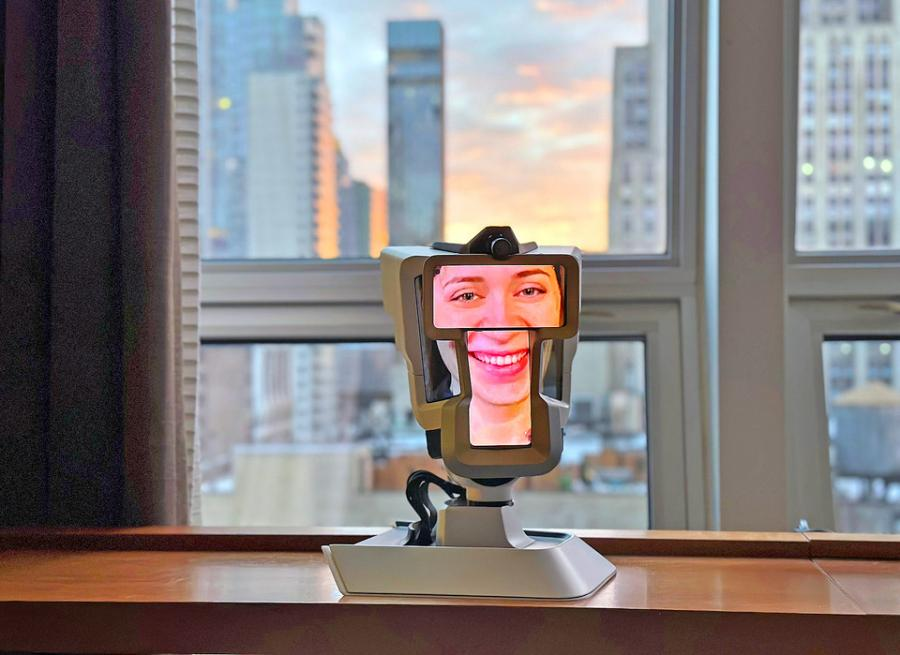
While I was initially impressed with its ability to ask interesting questions and respond to my answers, the conversation soon turned to questions about what kind of cryptocurrency I was interested in. After looking dumbfoundedly over at the person overseeing his robot, I then found out that this product was ultimately designed to be a cryptocurrency advising tool, which admittedly I had very limited working knowledge of.
This particular demonstration, which was developed by a company called WeHead was just one example of several potential future applications of tomorrow’s technology showcased at this year’s “Create the Future Summit“. Held on Friday, June 7th, 2024, at a converted warehouse in West Berkeley, the event was full of keynote speakers, panel discussions, and many of the aforementioned robotics demonstrations.
For those interested in seeing specific people talk, the event did have an agenda for keynotes and panels, but for casual attendees like myself, it was very much a “choose your own adventure” kind of experience. Attendees had free rein to explore different vendors, robotics demonstrations, or simply take a snack break in the front hallway. For me, it was about learning how the future of technology addressed areas I was particularly interested in, such as sustainability and conservation.
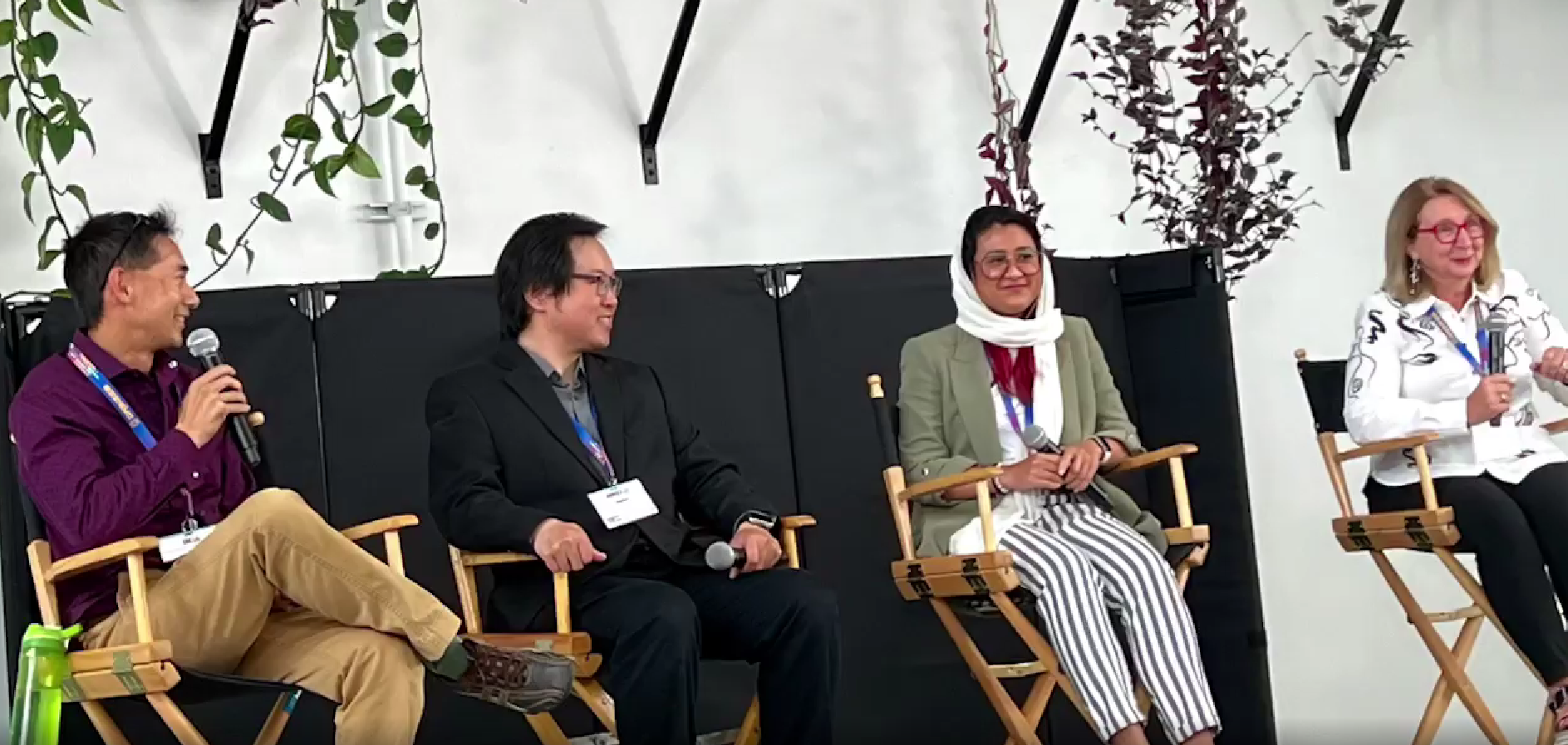
As someone with a background in tech, I came into this event with an open mind, eager to learn about emerging technologies and existing views on AI and machine learning. I also wanted to meet like-minded people who shared the same curiosity but also had trepidations about blindly trusting AI’s capabilities and applications in real-world situations, such as law, healthcare, or finance. The event seemed to have a healthy balance of optimism and skepticism.
Much of what I’ve written about in the past year has focused on how we in the business and tech world can be more sustainable and how future technologies can help companies be more “green.” I hoped attending this event would help solidify the opportunities to partner with companies that want to be eco-friendly in their product development. What I observed was a hive of activity with many people looking to solve what they believed were the most critical problems to address.
One of the key facilitators of this event and host of the Silicon Valley Podcast, Shawn Flynn, felt the event was a huge success. “As I was walking through the event, everyone was talking to each other,” Flynn said of the event afterward. “You could see ecosystems building, conversations starting, transactions about to happen… there were so many action items to come, which is what we were aiming for.” This was just one of several goals Flynn had in mind regarding the ideal outcomes for the event. While he admitted he was mostly running around ensuring the event ran smoothly, he said he did have some very fruitful conversations with aspiring futurists and was very impressed with the quality of speakers on each panel.
Perhaps the most anticipated keynote was from the incoming UC Berkeley Chancellor, Rich Lyons. Unlike a concert or comedy show that saves their best for last, this event kicked off with a rousing speech from Mr. Lyons. Given his important role, especially within Berkeley and the nearby campus, he had some inspiring words for the 850+ attendees. He emphasized three words he hoped the audience would take away: 1) learn, 2) connect, and 3) be of service. The event itself aimed to teach and connect people, but he strongly emphasized using these skills and future technologies to be of service to each other.
Aside from the keynotes, there were a plethora of panels held by leaders in banking, government, and tech. One particular panel I attended discussed quantum computing. While I didn’t pretend to understand the complexity of the terminology, you could tell the panel was full of people genuinely believing in this future capability to process vast amounts of data could solve some of our most pressing challenges we face today. While watching the dialogue go back and forth, I tried to see where our potential areas could overlap, but clearly some of the terms used and even mathematical formulas written down had me just shaking my head in awe of the brilliant minds in attendance.
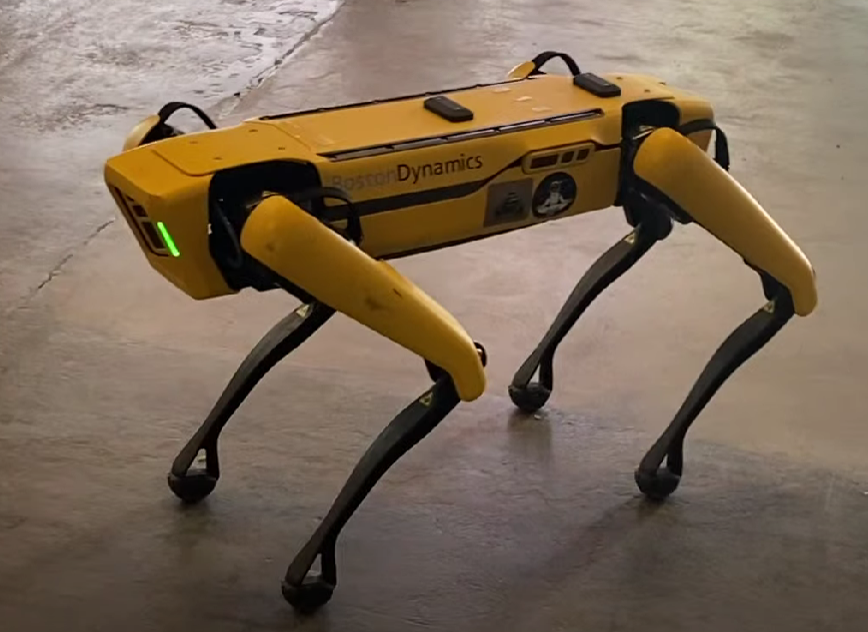
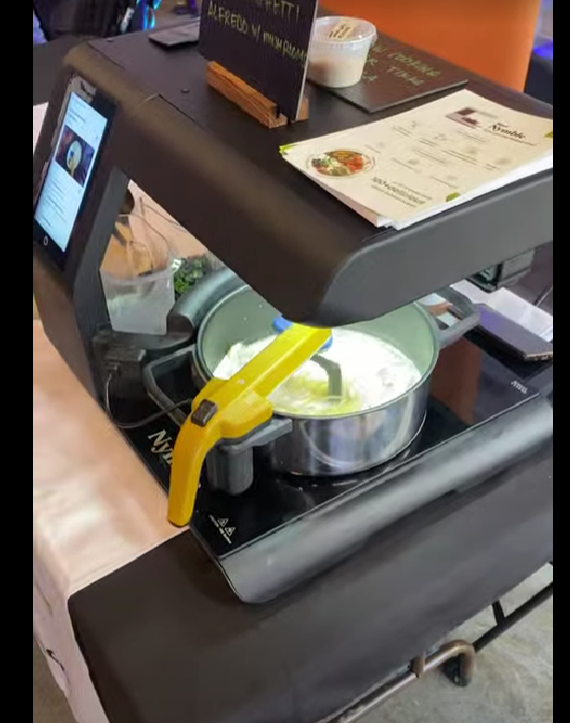
For those curious about physical demonstrations, one section of the conference space held a Robotics Demonstration room, which included a table for AI-generated artwork, an automated meal cooker with over 1,000 recipes, and even that Black Mirror-looking robot-dog from the renowned Boston Dynamics. Another vendor that caught my attention was a company called Ethereal Matter, which was developing a fully immersive VR experience. Founder Scott Summit, who ran the VR demonstration, incorporated exercise into his system, allowing users to immerse themselves in various environments while exercising. I manned a spaceship turret to shoot at asteroids and even got to try out a hovercraft reminiscent of a Star Wars Pod Racer. In a not-so-subtle nod to potential investors, Scott incorporated a Nvidia logo on the podracer to attract their interest.
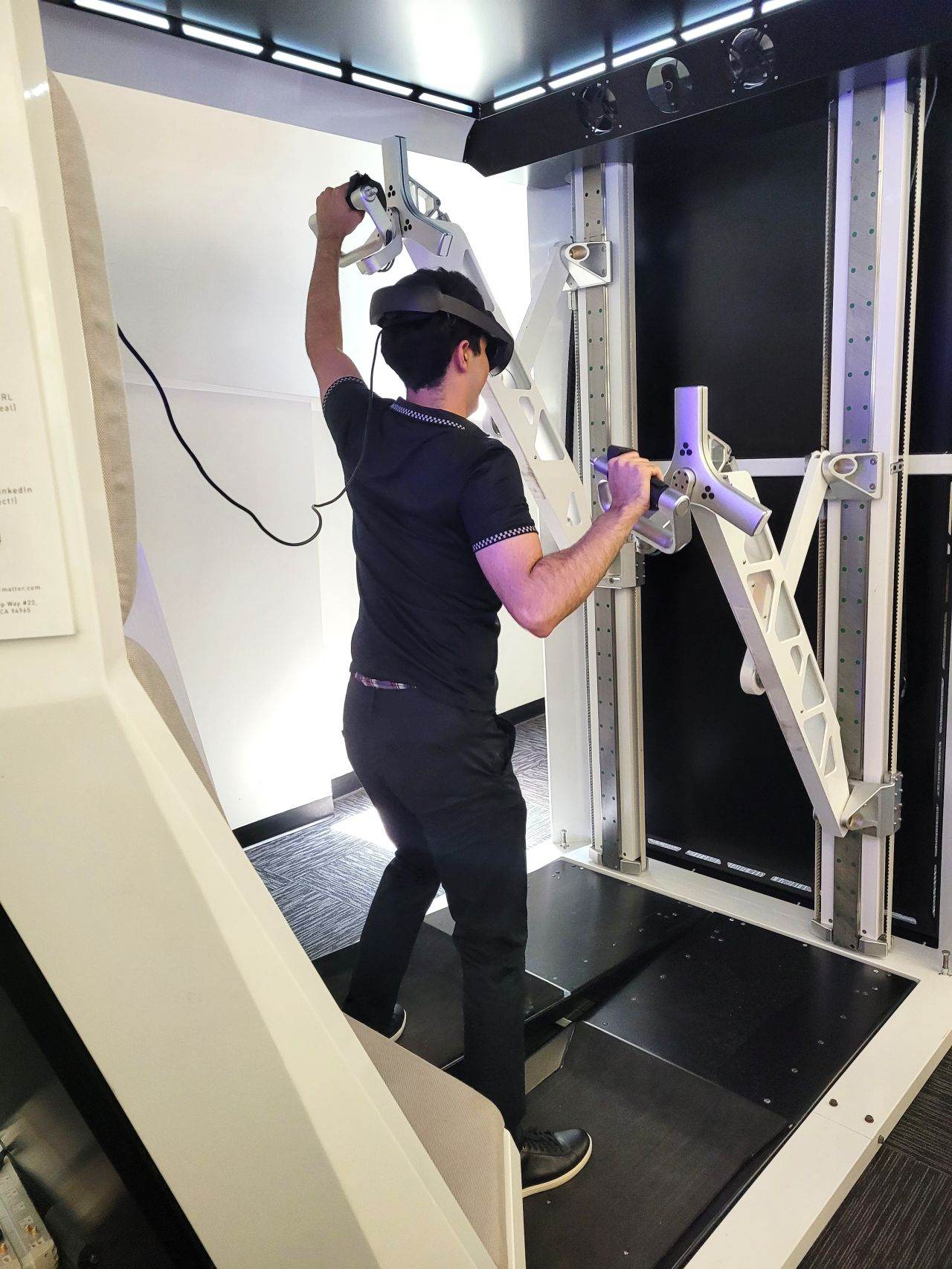
You could see that several of these vendors were on display looking for the right partnership, whether it be a high-value customer or an investor for their latest business idea. At the same time, there were also supportive groups helping aspiring entrepreneurs like myself get off the ground or find a new job. One particular table situated in the middle of the hallway, which every attendee had to pass by, was the nonprofit East Bay Small Business Development Center (SBDC), a no-cost advisory service for people looking to start their own business. They were setting up appointments with upcoming entrepreneurs right there.
Another noteworthy table was a mentorship program aptly named “The Mentoring Club,” founded by former tech worker and now founder, Lisel Mendoza. Her company strongly believes in providing free trial services to mentees who can connect with mentors to advise them through their many ups and downs. The event had a recurring theme: the future of technology as an enabler to lift each other up rather than simply profiting from one’s ideas.
Of course, being the realist that I am, I would be naive to say people were in it purely out of the goodness of their hearts. AI is a huge disruptive force right now, permeating almost every aspect of the business world, including the very competitive gold rush scene that Silicon Valley has become over the past 20 years. Flynn clearly saw things in multiple dimensions, particularly regarding how businesses will launch and get funded in the future. “I think what’s really going to be interesting is the business development lifecycle and the time to exit,” Flynn said matter-of-factly. “With AI, it’s going to be a much quicker exit for those companies that find their product-market fit.”
After all was said and done, the event set out to do exactly what it said it would: bring together people who wanted to understand the current technology landscape and be hopefully be part of the future this technology could create. If this summit has taught us anything, it’s that the future is both exciting and unpredictable, but the connections we make with each other will be the only way we can successfully navigate it.
 Patrick Meeker: Sustainability-focused Product Management and Digital Transformation
Leave a comment