I’ve been birdwatching for over 20 years. When I tell people that this is one of my main hobbies, I usually get one of two reactions. The first is genuine surprise that a young person like myself does this as they typically have the image of an older person with their khaki colored clothes all huddled together with their binoculars looking up in the trees. The second reaction is one of fascination, which is what I want to explore in this post through what I like to call “Ornith-angelism”.
The term Ornith-angelism was actually coined by my colleague and fellow birdwatcher, Jeff Manker, who presented this topic as his final presentation in our master birdwatching class. The tenets of Ornith-angelism are based creating an awareness of how birds are currently doing today and then to spark interest in creating a movement of encouraging others to teach and learn about birds. From there, hopefully the message grows.
3 billion birds
A 2022 state of the birds report was published by the North American Bird Conservation Initiative, which shockingly reported that 3 billion birds have been lost since 1970. What that number means is based on survey data of bird populations over the past 50 years, the total count of individual birds has dropped dramatically. They made the equivalent to about 1 in 4 birds have been lost. At the same time, there are roughly 70 bird species considered at their tipping point of losing over 2/3rds of their population.
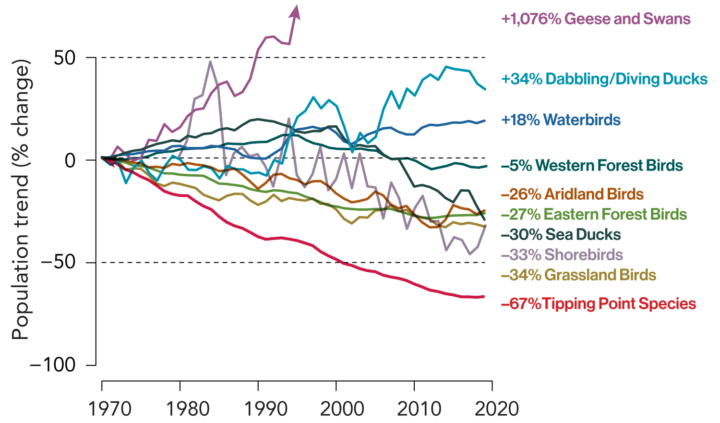
Much of this decline over the past 50 years can be attributed to habitat loss, which based on ever present land development is almost always is in direct conflict with bird habitats. Other major contributing factors are from collisions with buildings, ingesting plastics and poisons, and probably the most concerning being outdoor cats. Cats account for roughly 65% of the total bird population decline. While I appreciate cats as a pet as much as the next person, it is incredibly important that domesticated cats be kept indoors if possible.
It is not all bad news, though. While the data shows that birds of all types have been impacted by this decline, we have seen gains in some types of birds. Waterfowl, which include your ducks, geese, and swans have seen an uptick in their populations so it’s good to know winter migrants like ducks are going strong. Much of this can be attributed to wetland conservation efforts many public and private groups have poured great time and resources into.
Invite, Teach, Encourage, Repeat
Now the stage for the current state of birds has been set, it is now time we focus putting the foundations of Ornith-angelism into effect. So where do we start? The first place we can focus our efforts on are our underrepresented and younger people. No doubt, it’s going to be difficult competing for their attention based on stimulating forces like screens such as their phones and video games. On top of that, many people live in urban communities with little to no access to natural spaces. Despite these obstacles, I believe we can leverage these forces to our advantage. This being the 21st century, there are a number of technology resources we can use. Apps like Merlin and eBird are incredibly advanced and encourage the identification of birds using sound and image technology. In addition, you can start tracking your sightings and create a life list. It was games like Pokémon Go that became a huge phenomenon a few years ago and got people out of the house looking for specific species. I see an exact mirror of that activity in birdwatching.
As someone looking to recruit when you’re out in the field birdwatching, keep your eyes peeled for people walking by observing you. Try to create a welcoming atmosphere by inviting them to look through your binoculars or spotting scope at a bird they normally wouldn’t see up close. I will say this does require some level of trust, especially if you’re using an expensive piece of equipment but if you are able capture their fascination, it’s totally worth it.
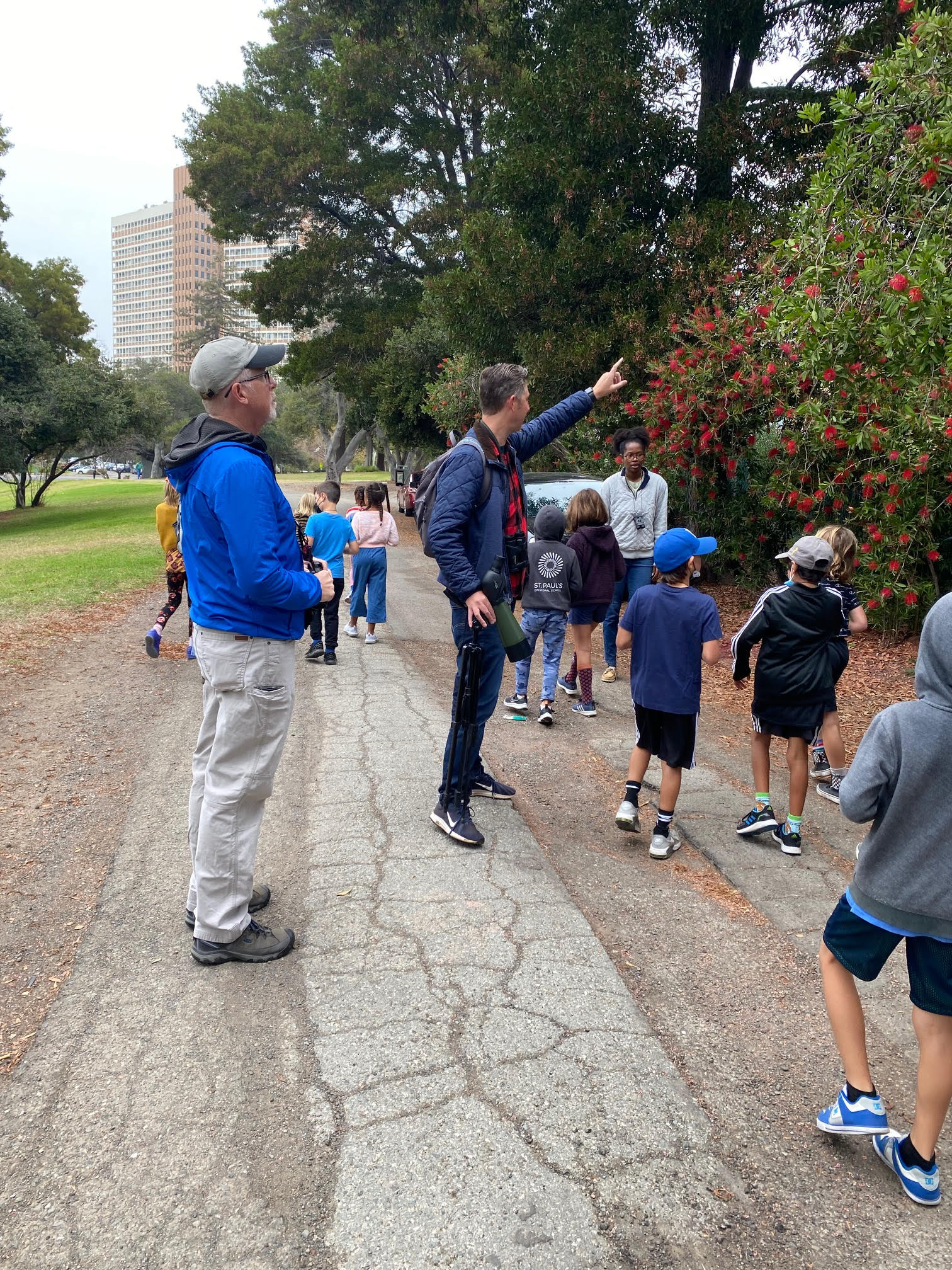
My experience leading groups on field trips has shown me how much educational institutions crave this type of learning. Try reaching out to schools or volunteer organizations like the Audubon Society to get involved in a classroom and be able talk about birds and birdwatching is an easy and powerful way to give back. Your local church or temple also have welcoming communities and more often than not, will encourage you to take groups out on local field trips. If you aren’t comfortable doing it yourself, there are many birding professionals (like myself!) where you can ask to lead a field trip. You can also reach out to a local Audubon Society chapter and they can provide a resource for you.
I had the privilege to connect with a local elementary school in Oakland during my master birdwatching class and offer to take kids out on a field trip around nearby Lake Merritt. Not only were the kids outside but they were learning about the natural space they’ve lived around their whole lives. I had moments of seeing their eyes light up when I could tell they were learning something. Even if they learn only 1 thing about a bird, I consider that a huge win. I also had the opportunity to take a group of adults my mom knew in her church and take them on a field trip as well so Ornith-angelism doesn’t just apply to the younger generation as well!
One very important component of teaching is around using the equipment for birdwatching. Something about holding the hardware and seeing the bird through the lens really captures the fascination of the person. Teaching proper handling of how to raise the binoculars up to your eyes and focusing on an object will be critical to teach. At the same time, despite my claims of using 21st century technology, you really can’t go wrong with having a trusty field guide on hand. This gives your audience a visual overview of how to describe a birds, where they can be found, and what they may sound like.
If you have the budget or are able to get support from your network/community, I highly encourage donating binoculars and guide books to your local schools or community centers as they such an important components of birdwatching.

Birds have so much to offer in terms of their visual beauty and their unique behavior. In one moment, you could be looking at an Anna’s Hummingbird fluttering its wings at 80 beats per second with its shimmering red throat drinking nectar from a flower and then all the sudden catch a glimpse of a Hooded Oriole with it’s bright orange head and black body darting around in the trees. You could also see a Red-breasted Nuthatch hanging upside-down of a tree trunk and then look out and see a long-billed Curlew probing the mud on along the shoreline. You may even see a Red-shouldered Hawk flying over with a rodent in its talons off to feed its hungry family. There are so many beautiful and unique moments birds have to offer if you only start paying attention.
I strongly believe Ornith-angelism will be the path to creating more awareness for birds and ultimately create the interest for our next generation to protect our natural spaces and all who live in it. When thinking of Ornith-angelism think of this mantra:
Invite. Teach. Encourage. Repeat
Good luck becoming a fellow Ornith-angelist!
 Patrick Meeker: Sustainability-focused Product Management and Digital Transformation
Leave a comment