“If I take refuge in ambiguity, I assure you that it’s quite conscious” – Kingman Brewster, US Diplomat/Educator
In today’s world of environmental challenges and digital transformations, product managers must embrace ambiguity to drive both innovation and sustainability. Whether it’s navigating the V.U.C.A. forces—Volatile, Uncertain, Complex, and Ambiguous—or understanding how our products contribute to solving environmental and societal challenges, the unknown is ever-present.
This blog post outlines how you can apply product management principles to not only achieve your business goals but also align with sustainability and citizen science initiatives. Whether you’re managing digital transformation for eco-friendly solutions or building tools for data-driven conservation efforts, embracing ambiguity can lead to meaningful change.
Consistently Looking at the Data
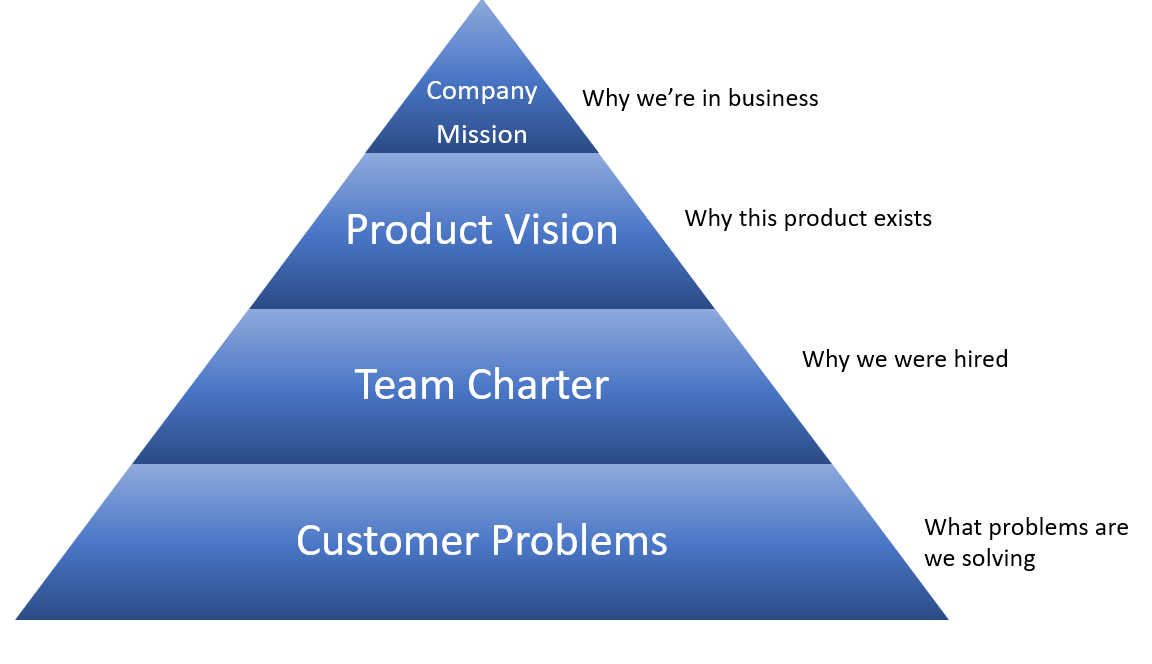
The first step to navigating the unknown is harnessing data—both for product decisions and for sustainability efforts. Whether you’re analyzing energy use, supply chains, or citizen science data like bird population trends, knowing what you’re solving for is key. Begin by asking: What is our product’s impact on the environment? How can it contribute to reducing resource waste or promote conservation?
By aligning with the goals of citizen science—such as monitoring biodiversity or tracking climate impact—you can connect the dots between your product and a larger purpose. For example, if you’re creating a platform that allows users to submit environmental data, you’ll want to measure not only user engagement but also the ecological impact of the data collected for example the loss of square mileage in deforestation that directly impact bird populations.
Once you understand these high-level objectives, you can then correlate the aforementioned data points we have identified towards those goals. Let’s take one example of a team’s objectives, which is to increase its product adoption by 50% in 12 months. What that team should be doing is tying that objective to data points such as your daily/monthly active users and your customer churn rate (total lost customers / active users). If you get really crafty, you can even make correlations based on your support calls to your active users as those people are actually using the product and you can mine them for additional use cases to increase adoption.
Learning to Fetch the Right Data
Learning to run SQL queries or automating reports can give you real-time insights into the impact of your product on both customers and the environment. It’s about ensuring you’re pulling the right data to make informed decisions—whether that’s the carbon footprint of a supply chain or the engagement rate of users contributing data through a citizen science app.
For example, if one of your objectives is to reduce carbon emissions by 20% over 12 months, you’ll need to track key metrics like energy consumption and carbon output per user. Similarly, if you aim to increase user participation in a conservation app, you could track data submission rates and how that data is used by scientists to address environmental challenges.
Assess Your Risk in Both Product and Environmental Impact

In product management, risk often revolves around resource allocation, but in sustainability, it’s about long-term impact. Just as you would assess the risk of building a new feature, consider the ecological risks of product decisions. Can you reduce waste? Can your digital product encourage sustainable behavior?
Think of your product roadmap like a sustainability portfolio. You want to invest in a balanced mix of short-term wins, like reducing paper use through digital tools, alongside big bets—moonshot ideas like using AI to predict wildlife trends from user-submitted data. Each decision you make should weigh both business risks and the environmental impact.
Using the above chart, you can start adding your feature level details in the 4 quadrants based on the your understanding of the value and confidence in its implementation. The goal here isn’t to have everything live in 1 quadrant but have a healthy mix of quick wins and no brainers with an occasional moonshot or 2. These are your “big bets“, which paired with the available data you have, can allow for innovation within your organization. Think of your roadmap like you would a financial investment portfolio (and no, I don’t claim to be a financial guru). Like your investments, you want your roadmap to have a healthy mixture of stocks, bonds, and mutual funds or in product terms, small, medium, and large features.
Make a decision without all the facts
In conservation and citizen science, just like in product management, we often don’t have all the facts. But uncertainty shouldn’t stop us from making decisions. Instead, focus on making the best decision possible with the data you have—be it user analytics, energy use reports, or species population data.
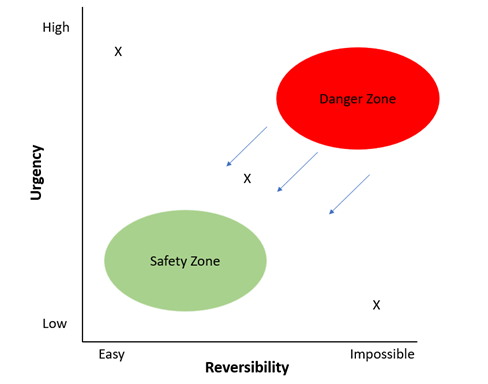
Take inspiration from urgency/reversibility frameworks when evaluating environmental impact. Is your decision urgent? Is it reversible if the environmental cost turns out to be too high? For example, choosing a server infrastructure with a high energy demand might seem minor in the short term, but its environmental impact could be irreversible over time
On the flipside, if you aren’t prepared i.e., haven’t done your homework then some of these self criticisms are warranted. Another useful frame of reference you can use to evaluate a decision, similar to the ROI/Confidence chart is an Urgency/Reversibility Matrix. For the simplicity of making a decision on your feature sets, it’s important to know what work you take on can be easy to fix if a mistake is made or how irreversible it is. Be sure to evaluate against how urgent this decision is against how reversible it will be.
Embracing the Unknown for Greater Impact
As product managers, we don’t need to know everything, but we need to ask the right questions. By considering both the business and environmental impacts of our products, we can create solutions that not only meet customer needs but also contribute to a more sustainable future.
I know it is hard to hear but I implore you: Embrace uncertainty.
From there, align your work with the values of sustainability and citizen science, and you’ll find that ambiguity can lead to innovative and impactful solutions that benefit both your business and the world.
Good luck voyaging through the unknown—because in that uncertainty lies the potential for great change!
 Patrick Meeker: Sustainability-focused Product Management and Digital Transformation
Leave a comment